

|
Objectives
- to promote education about pain in children
- to share relevant information about childrens
pain control
- to advance our ability to alleviate childrens
pain from an international and interdisciplinary perspective
- to encourage research, particularly multicenter studies,
and studies which focus on unique problems of pediatrics, including
newborns.
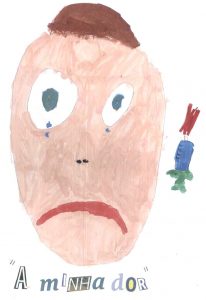
Image at right: First prize winner in a contest sponsored
by the Portuguese Association for the Study of Pain (APED) as part of
the Global Year Against Pain in Childhood (2005-06). Hospitalized children
aged 3 to 12 years submitted drawings of their pain.
Leandro, the first prize winner, received a weekend in
Eurodisney for 3 persons. This 5-year-old boy was hospitalized for chronic
otitis and acute mastoiditis. He wrote the word "DOI" ("it
hurts" in Portuguese) coming out of his ear. He used red to represent
physical pain in his hand , where he had an infusion. The pictures by
the 2nd and 3rd prize winners, who received PlayStations, are shown on
this
page on the APED website.
Thanks to Dr Jose M. Castro-Lopes
for this contribution.
|
|
The Special Interest Group sponsors an International Symposium on Pediatric
Pain (ISPP) every three years.
Web site manager:
carl.vonbaeyer [at] usask.ca
Disclaimer: The contents of this site are
not reviewed by, and are not necessarily endorsed by, the International
Association for the Study of Pain ®
11 Mar 2008
|
SIG Position Statement
Childrens Pain Matters!
Priority on Pain in Infants, Children, and Adolescents
Pain relief is a human right, yet pain in children is an under-recognized
problem around the world. The Special Interest Group on Pain in Childhood
of the International Association for the Study of Pain® is dedicated
to improving pain prevention and treatment for children everywhere.
Children suffer pain from many causes.
Children not only have pain from life-threatening diseases such as cancer,
but also from injuries, surgery, burns, infections, and the effects of
war, terrorism, and violence. Children also undergo pain from the many
procedures and investigations used by doctors and nurses to investigate
and treat disease. A large number of children suffer chronic or recurrent
pain.
Childrens pain matters.
Even newborn and premature babies feel pain. Children remember pain,
and may avoid future medical care because of painful experiences in a
hospital or clinic. Untreated pain suffered early in life can have profound
and long-lasting effects on social and physical development, and can cause
permanent changes in the nervous system that will affect future pain experience
and development. When children suffer, so do their parents, family, and
caregivers, and caring for a child with chronic pain can cause the family
emotional and financial stress. Chronic pain may have a better prognosis
if treated early in life than if it is allowed to persist into adulthood.
Childrens pain isnt treated adequately, even though we do
have the ability to treat or prevent most pain. Most pain can be either
prevented, treated, or at least reduced using inexpensive medications,
psychological, and/or physical techniques. In spite of this, most children
in the world do not receive adequate treatment.
Why isnt childrens pain prevented in the 21st Century?
Childrens pain can be difficult to recognize. Children may appear
to sleep or play even when they have significant pain, so their pain is
not identified. Asking the child about pain gives the most important information.
Many other assessment tools have been developed for newborn and young
children and children with developmental disabilities who are unable to
report their own pain in words. Health care providers and parents often
worry that pain medicine will be dangerous for children. In fact, children
can receive most of the same medications as adults, as long as the dose
is adjusted for the size and age of the child, and for the amount of pain.
Children will not become addicted to strong opioid pain drugs, as long
as they are prescribed appropriately for pain treatment. In some countries,
inexpensive pain drugs are not available, because of importation or distribution
restrictions.
What do we need to do?
Childrens pain must become a priority for all health care professionals.
Health professionals must be trained in pain measurement and management
techniques that are specific for infants and children, and there should
be an expectation by children and their parents that pain will be assessed
and managed. Health services officials must initiate programs to ensure
that appropriate medications and the resources for non-pharmacological
management are available and that pain is assessed, prevented, and treated.
Countries around the world must proclaim that children have the right
to the best pain management possible and put into place mechanisms to
see that this right is realized.
2005-08-24
|